Pon Street
Dudus Coke update – 28.05.2010
 There is a trail of blood on the streets of Kingston, as more civilians die. The toll now is supposed to be over 70 and unofficially nearing 100. Yesterday Keith Clarke, the brother of former People’s National Party (PNP – the opposing JLP politcial party) government minister Claude Clarke and the brother-in-law of Children’s Advocate Mary Clarke.
There is a trail of blood on the streets of Kingston, as more civilians die. The toll now is supposed to be over 70 and unofficially nearing 100. Yesterday Keith Clarke, the brother of former People’s National Party (PNP – the opposing JLP politcial party) government minister Claude Clarke and the brother-in-law of Children’s Advocate Mary Clarke. The Clarke family said last night that they were “horrified and shocked by the dangerous, unprofessional and outrageous conduct of the security forces … who forcibly invaded his home and killed him in front of his wife and daughter”.
They have demanded a “complete, full and thorough investigation” into the matter.
Glenmore Hinds, who heads the operation, said the operation was part of an islandwide effort to apprehend Coke.
According to Hinds, the Acting Deputy Commissioner of Police, in addition to Clarke, four Jamaica Defence Force (JDF) soldiers were left nursing gunshot wounds during the confrontation between the soldiers and gunmen.
Speaking at a press conference at the Hilton Kingston hotel in New Kingston yesterday afternoon, Hinds said one firearm was recovered in the operation.
It was reported in the Jamaican Gleaner that, acting on information, a massive JDF team went to premises in East Kirkland Heights reportedly owned by one of Coke’s key business associates.
 With helicopter support, the soldiers stormed the premises and fired shots. Loud explosions rocked the usually quiet suburban community, causing residents to duck for cover.
According to the residents, shortly after 2 a.m., their night’s rest was disturbed by the sound of a low-flying helicopter.
The residents said this was quickly followed by loud explosions and bright lights across the sky.
“Then a just pure (many) gunshots, for about 20 to 30 minutes, and me hear nuff heavy-duty weapons a fire,” one resident, who requested anonymity, told The Gleaner.
She said that after a lull, when the only sound heard was of raindrops on the roof, the gunfire resumed.
“There was another barrage and then there was sporadic shooting for the next two hours,” the resident said.
She said the gunfire appeared to be coming from different directions and sounded as those firing were moving.
It is not clear how the shooting moved from the initial premises to two neighbouring properties or how Clarke was killed.
“The matter is now the subject of an investigation by the Bureau of Special Investigations and I am constrained to say nothing more at this time,” Hinds said.
The hunt for alleged Shower Posse Don, Coke, started in Tivoli Gardens before moving to Coke’s home in Plantation Heights, St Andrew, and another residence in Greater Portmore, St Catherine.
The battle between the Jamaican Police, the Army and Coke’s supporters has already led to the death of at least 73 civilians, including some believed to have engaged the security forces in gun battles in Tivoli Gardens and Denham Town earlier this week.
Meanwhile, the Police High Command issued an appeal yesterday evening for 13 men it describes as gang members or leaders to turn themselves in. What started as a request by the US to extradite Coke’s, now seems a war to clear the Dons from all Jamaican communities.
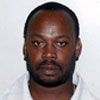
 THE police have issued a new photograph of Christopher ‘Dudus’ Coke. The photograph was found on the floor of his Presidential Click office in Tivoli Gardens, West Kingston, following the assault by security forces on the community, which began on Sunday.
“It is being strongly suggested that he has since shaved his head and face,” said a statement issued today.
‘Dudus’ Coke heads the list, followed by his brother Laighton Coke, popularly called ‘Livity’.
The police also want reputed Arnett Garden gang leader George Phang to surrender himself.
This is the second time in three days that the police are issuing an appeal for wanted men to turn themselves in. Following the first appeal, 12 men turned themselves in.
STILL WANTED IN KINGSTON:
KINGSTON WESTERN
- Tivoli Gardens – Christopher Coke, otherwise called Dudus
- Laighton Coke, otherwise called Livity
- Arnett Gardens – Gang George Phang
KINGSTON CENTRAL
- Central Kingston – Donovan Ainsworth, otherwise called Pepsi
- Tel-Aviv – Delano Walker, otherwise called Fidel
- P.O.W. Crew – Anthony Harding, otherwise called Prince Pow
KINGSTON EASTERN
- Top Road – Earl Brown, otherwise called Chun
- Bryden Street – Jermaine Layne, otherwise called Cutter
- Top Jacques Road – Everton Douglas, otherwise called Fuba
- Bottom Jacques Road – Troy Ricketts, otherwise called Ockra
- Goodwich Lane – Michael Ewan, otherwise called Mikey One Two
- Burgher Gully – Michael Murray, otherwise called Bizzy
- Hypolite Road – Andrew Salmon, otherwise called Alcapone
Others included, Ogilivie, otherwise called ‘Stingy’, who is a member of the Presidential Click business and one of three alleged Shower Posse members the cops have targeted.
The others are Harry Mcleod, also called ‘Harry Dog’; Prince Bucket, also called ‘Tugman’; and Paul KirkPatrick, otherwise called ‘Teddy Paul’.
Also, four members of the notorious Spanish Town-based Klansman gang — Tesha Miller, Jermaine Morrison also called ‘Speedy’, Nevardo Hodges and Michael Maragh — have been asked to contact the police.
Michael Pasley also called ‘Tony’ and Calvin Harris popularly known as ‘Collie’ from the Rat Bat gang are also wanted.
Below is an article from the UK Guardian newspaper. This highlights the troubles in Jamaica and the background. Unlike other media articles, this seems a balanced reflection of the shituation:
There’s no way in and no way out. The road is blocked by an upturned car, makeshift barricades of wood and rocks, and an exhausted soldier, standing in the rain. He waves his rifle menacingly at anyone who swings in to sight.
Beyond the roadblock lies Tivoli Gardens, the centre of the small war that has enveloped Jamaica’s capital, Kingston, this week. Somewhere in its maze, a woman called Margaret is beginning to have her doubts. The man she saw as the saviour of her family and community has brought death and terror to the streets, and she is uncertain now who to blame.
Last week, Margaret was marching in support of Christopher “Dudus” Coke – variously portrayed as the real power in Jamaica, as some kind of messiah and as the head of a criminal empire that reaches to Europe and North America – even though her elderly mother told her to stay home.
Some of her fellow protesters held up handwritten placards in protest at the government’s plan to extradite Coke to the US to stand trial for drug trafficking. One read: “Jesus died for us. We will die for Dudus.”
 Now though – after a three-day battle during which the Jamaican military hunted for Coke in Tivoli Gardens, his Kingston stronghold – Margaret is more concerned about what has happened to the father of her young daughter.
“If I go out, they kill me, I’m sure,” she says by phone. “The soldiers are everywhere. They are shooting everywhere. All the men have disappeared. They take them away. The women and the children are here but we have no food. There was so much shooting, my daughter, she is terrified. There are guns. There are bombs.” The allegations of indiscriminate shooting and beatings by the army have been made by others among the thousands trapped in Tivoli Gardens and other Kingston neighbourhoods under assault.
“Dudus has been good to us,” says Margaret, who will not give her second name for fear of reprisals. “He look after us. Everyone. He is the government here (in Tivoli Gardens) because the government don’t care about us, the poor. The government betrayed him.” She never expected the violence, though. “We didn’t need this war. It would be better if they fight somewhere else,” she says.
Margaret remains trapped in a part of Tivoli Gardens still under lockdown, but in another area that became accessible for the first time only yesterday, the evidence of heavy fighting is everywhere. Buildings are heavily pockmarked by bullets and hand-grenades, and there is blood on the floors. At one entrance to the area, soldiers have a handful of young men spreadeagled against a wall. But mostly only women and children remain and, while it is finally safe to step out of their houses, they do not venture far up the street.
As a line of soldiers on patrol passes on a street called Bustamente Highway, some of the women jeer and shout abuse. Paula Grey gesticulates toward the soldiers and accuses them of hauling off her 15-year-old son, Horrace, three days ago. She hasn’t seen him since. “I don’t know where he is. He’s gone. I hope they didn’t do what they did to a man across the street. They walked into that house,” she says, pointing to a building opposite the Faith and Hope Deliverance ministry, “and they shot him. Point blank. He didn’t have a gun.”
The wreckage of burned-out cars and barricades of tyres and barbed wire has been pulled to the roadside here by the army. But a few blocks on, the area is sealed off. There, the barricades remain in place, and the soldiers are hunched down with their rifles pointed up the street. So far, 500 or more men have been taken away by the military, and the “dons” of the gangs that rule the streets of parts of Kingston have been captured or surrendered.
The one person the government hasn’t caught is Coke, the 42-year-old don at the alleged head of the Shower Posse gang – so called because of its tactic of showering its enemies and hostile communities with bullets – that has been a feature of Jamaican life, and politics, for as long as women such as Margaret can remember. Jamaica’s former national security minister, Peter Philips, recently described Coke, who is popularly known as “the president”, Shortman and Bossy, as probably the most powerful man in the country.
When the government announced that Coke would be extradited to New York, some of that power became evident: whole communities were mobilised. His supporters threw up barricades. Some used barbed wire connected to power lines.
Then the gangs launched attacks on police stations to demonstrate their contempt for the authorities. On Darling street, the century-old British-built police station has been razed. It was firebombed in broad daylight, then looted as the police fled.
All this prompted the declaration of a state of emergency in the capital and the biggest security-force mobilisation in Jamaica’s history. Hundreds of soldiers and much of the Kingston police force were brought in.
Since then – with thousands of people still trapped in the areas of fighting– the police say they have seized the kind of equipment that could arm an insurgency: ammunition, military fatigues and body armour. However, they have yet to lay their hands on the much-feared Grizzly Big Boar rifle – a weapon used by American military snipers that uses armour piercing bullets – that they claim forces protecting Coke possess. In fact, they appear to have seized few guns of any kind. Officially, the death toll stands at 44, but this is bound to rise.
 There are a lot of questions the information minister, Daryl Vaz, can’t or won’t answer. How many armed men have the security forces been confronting? Has the government been in contact with Coke? Have troops raided his home? And, above all, who are the dead? Earl Witter, Jamaica’s public defender, an official independent role, has raised questions about the relatively high number of civilians killed compared with the small number of weapons seized. “The security forces have their own explanation. If they don’t find it particularly curious, I certainly do,” he said. The Jamaican press, meanwhile, have reported that two men were found with tags which indicated they had been shot by Coke’s supporters for refusing to fight on his behalf.
Coke’s own life has been racked by violence. Two brothers and a sister have been shot dead. His father, Lester, who was a former leader of the Shower Posse, died in 1992 in a fire in his prison cell. He was in jail awaiting extradition to the US on drug trafficking and murder charges.
Coke’s lawyer was, until the extradition order, Tom Tavares-Finson, who is also a Jamaican senator. Tavares-Finson has described his client as “just an ordinary Jamaican going about his everyday business”.
“Nobody has heard of him being involved in any criminal activity,” he told the Jamaica Observer in December. “[He is] trying to improve the lot of his children, his family and his community, with a recognition that he has an influence, and he takes his influence very seriously, and that influence is what is propelling the transformation of western Kingston.”
Tavares-Finson said it is not Coke’s fault if people want to turn him into “a mythical character”. “That is not his doing. Left to his own devices, he would not be on the front page of any newspaper,” he said.
That much is true. Coke – unlike some of the more showy dons such as the now imprisoned Donald “Zekes” Phipps, who loved to pose for the television cameras and boast about his power – largely sought to stay out of the limelight. Even in Jamaica’s raucous nightclubs he was known for sitting in the corner – albeit surrounded by scantily clad women – while other dons drew attention to themselves on the dance floor.
Even Coke’s supporters recognise that it may be criminal activity that has earned him the vast sums that allow him to wield the power he does. But then they regard all Jamaica’s leaders as crooks, and say that at least Coke looks after them. And this he certainly does. Coke sends the children of the poor to school. He buys their families food. Above all, he is seen to be loyal to his own people in a way that the island’s politicians are not.
“There’s no job here,” says Margaret. “There’s enough money for one thing but not the other. For food but not clothes. And if the child gets sick, who pays?” Until now, Coke and the Shower Posse did. Thanks to Coke, the residents of this area of Kingston – known as a “garrison” – pay no rent. No one’s power is cut off for non-payment. The gang maintained a form of law and order on the streets they controlled.
Tellingly, many of Coke’s supporters are women grappling with the daily struggle of raising a family in poverty. They care little if he makes his money from Americans buying drugs.
This is a strategy that has won favour for drug lords and armed groups from Colombia to Gaza. Pablo Escobar, who once oversaw the mighty Medellin cartel, was a Robin Hood figure to many of that city’s poor. He built whole streets for the near destitute, along with football pitches, churches and simply giving away cash. In return, the population were his lookouts and when Escobar needed someone to murder police officers, there was no shortage of volunteers. In the process he turned Medellin into the murder capital of the world.
But with Coke it seems to go further. The Reverend Earlmont Williams was shocked to see women marching with signs comparing Coke to Jesus. “It is obvious that the perception held of their leader by many residents of garrisons is built on their understanding of Jesus’ life and mission,” he wrote in the Jamaica Observer. “What bothers me is that their messiah theology is articulated in the reverse, in that rather than the garrison ‘messiah’ dying for his people, they are willing and ready to die for him.”
If nothing else, Jamaicans admire Coke’s energy. Until this latest spot of trouble, he ran everything from registered companies such as Incomparable Enterprise, which received millions of dollars in government contracts, to Presidential Click, which stages weekly street dances as well as the popular Champions In Action dance-hall event. And while doing all this, if the charges against him are to be believed, Coke was managing a sprawling organised crime network that reaches from Jamaica to Britain and North America.
The US indictment against Coke says he has controlled Tivoli Gardens for close on two decades. It describes the area as guarded by gunmen. “These gunmen act at Coke’s direction. Coke arms them with firearms he imports illegally, via a wharf located adjacent to Tivoli Gardens. Coke also distributes firearms to other area leaders of other sections of Kingston, Jamaica,” the indictment says. “Organisation members in the United States routinely seek Coke’s advice and approval for various matters relating to the sales of narcotics, including how to resolve conflicts with other Organisation members. The members of the Organisation commonly send cash and goods, including clothing and electronics to Coke as ‘tribute’ payments, in recognition of his leadership and his assistance.”
It is more than just gang members in New York who have spent years paying tribute to Coke. Tivoli Gardens is one of the neighbourhoods known as “garrisons” because they were built by one of Jamaica’s two political parties during their rotations of power, and could be relied on to deliver up the vote accordingly. But with that political control developed criminal organisations that were key to the parties maintaining their grip on the vote.
Tivoli Gardens happened to be built by the Jamaica Labour party and the man Coke has been delivering the vote for is the local MP, Bruce Golding. He is also now the prime minister and Coke’s would-be jailer. To many of the poor that smacks of betrayal and hypocrisy.
For nine months, Golding did in fact resist US pressure to extradite Coke. The government said that the evidence against him had been obtained illegally by the Americans. The Jamaican prime minister even hired a lobby firm in Washington to try to get the US authorities to drop the extradition request. Only when that was made public, and Golding looked to the entire country as if he had been bought and sold by Coke, did the prime minister change his mind and move against the Shower Posse leader.
Meanwhile the business community, so long a target for the dons’ rackets, is egging the government on. “Extortion from businesses has been one of their main sources of funding,” says Milton Samuda, a lawyer and president of the chamber of commerce. “We’re heartened to hear that the operation won’t be confined to West Kingston, and we’ll be pressing for it. It’s our intention to ensure that this is the commencement of a process.”
But Samuda recognises that the violent purging of gangs from Tivoli Gardens and other garrison communities will not address the core reasons for their support. “There has to be a break between the historic ties between criminality and politics. But separate from that, part of the reason that these gangs are able to take over communities is because they supplant the state,” he says. “If the gangs are paying school fees and clothing people and ensuring people get medical attention, then those who receive will be beholden. There’s a cultural shift that will have to take place, which means that when you get rid of them you have to have the social services coming right in behind until people are able to fend for themselves.”
But are the politicians taking that seriously? “We’re past the stage of caring whether they take it seriously. It’s going to have to be done and we’re going to agitate for it,” says Samuda.
Already some in Jamaica are declaring that the pact between the criminals and the state has been broken. The next election will demonstrate if there is any truth to that. In the meantime, Coke is still on the run, only adding to the myth. In his absence, rumours are sweeping the streets. He has fled Jamaica. He is negotiating his surrender. He never left Kingston. “It would be better if they never find him,” says Margaret. Jamaica’s leaders may secretly agree.
For further information read an article in the Jamaican Observer
More updates to follow on Supatrax.com – Join our Facebook page for further information.